

Most print professionals agree that automation is essential to improve workflows in their facilities. But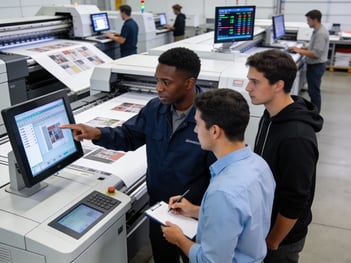 it’s not all about AI, sophisticated software, and robotics. We must also consider the people who work in the printing industry. How must they adapt, and who will help them learn the new skills they will need to thrive in a modern print operation?
The printing business is no longer just about running presses. Modern print businesses must be data‑driven, automated, color‑critical manufacturing operations. As an owner, executive, or manager of a print facility, you’ll need staffing plans to address the people side of the business.
Current Skills Are Not Enough
Traditional skills in areas like press set-up, bindery, and color adjustment aren’t going away, but they may not be the differentiating factors they once were. Print customers want personalization at scale, high quality, omnichannel integration, and quick turnaround—all at reasonable prices. They expect excellence in all those traditional services and know that, if their current printer isn’t making the grade, they can easily find another printing company to take on their work.
An aging workforce and difficulty recruiting young talent into craft positions make automation an even greater imperative for print operations. Your team must be proficient in the technical and strategic areas that are necessary to take advantage of the benefits that automation platforms can offer.
From Mechanical Mastery to Data and Automation
In a more automated environment, you won’t be relying as much on seasoned employees to do manual tweaking. Prepress and production MIS systems can handle job specifications, imposition and finishing functions, sending instructions directly to equipment. AI tools might automatically fix common issues and validate input files. Your staff must be comfortable with items like dealing with exceptions and escalating a problem that requires more attention, but they might not be the ones responsible for following standard operating procedures every day.
For instance, color management tools like ChromaChecker allow you to ensure brand color consistency across multiple presses and applications without relying on only the eyes of experienced color technicians. In fact, some national brands require you to use such automated platforms. Of course, your people must have the ability to learn the tools and understand the color management data they generate.
Hiring for New Competencies
Your staff needs different skills than they did just five years ago. Automation technology is moving fast. Instead of searching for experienced technicians in a diminishing pool of candidates, find valuable employees with digital skills and teach them about the print manufacturing-specific aspects they will need on the job. Here are some attributes to seek when looking to augment your staff.
Digital Savvy
Job candidates should be comfortable with digital interfaces that control equipment. You’ll be asking them to manage platforms like MIS or ERP systems. Other areas might include CRM, marketing platforms, or color management systems. New hires should demonstrate a general data-management aptitude.
Automation Oversight
New employees in your automated environment will be configuring workflows and monitoring dashboards. They must be able to recognize when something goes wrong and intervene. This might include making adjustments to settings or documenting issues for later analysis.
Advanced Print Technologies
Traditional offset printing experience may not be as important in your organization as exposure to production inkjet, often the most appropriate method for short runs and variable data printing (VDP) operations.
Learning and Adaptability
Technology is always evolving. Look for employees who can learn new systems quickly and fill multiple roles within your organization, such as estimating, planning, or customer service.
Training Your Veteran Staff
You can achieve substantial success by retraining your existing staff. Your experienced people thoroughly understand the properties of ink, substrates, and print quality. These are skills on which you can build. Leverage their expertise and teach them the new systems. Digital tools offer tremendous productivity gains, but they are not 100% flawless. Your seasoned operators will spot those rare instances when something is “off”. An inexperienced new operator may not notice.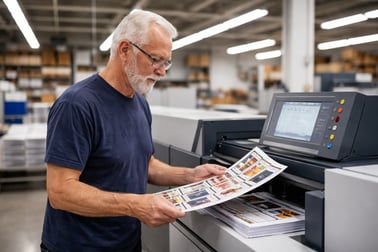
Retraining people can be very efficient with digital training platforms that can reduce training time. Your experienced employees can learn about automated workflows and digital interfaces much quicker than they could through the “book learning” methods of past decades. Thick printed manuals are being replaced with short videos and modules that focus on a single task.
Equipment-makers are building intuitive, picture-driven interfaces and chatbots. These innovations make learning new material easier for employees who aren’t “digital natives.”
The employees who transition successfully may shift from manual laborers to positions like system managers or quality control leads. Their experience allows them to spend their time supervising automated production rather than tweaking machines. Training your high-value employees to contribute in a new, automated print manufacturing environment allows you to retain that talent and recognize the long-term worth of these individuals.
Beyond the Production Floor
We’ve been addressing automation in the print manufacturing environment, but similar transitions are happening in other parts of a typical printing business. Perhaps even before you experience significant shifts in the plant, you’ll see automation and digitization creeping into the front office and other areas of your business.
Look for AI-powered tools to assist in marketing, sales, and estimating. Many organizations have enthusiastically adopted these systems to make their businesses run more efficiently. Training your people on new skills, such as AI best practices, promises that your staff is using the technology safely and you are benefitting from your AI investments.
Areas such as customer service, onboarding, inventory and procurement, billing, and financial reporting are all undergoing rapid transformation as companies of all kinds implement AI-powered platforms. The printing industry can use the newest technology to enable tasks like automated quoting and self-service to deliver the experiences that your customers expect, but you’ll need to hire people capable of manipulating these platforms or plan to train your existing staff.
Partners to Assist
It isn’t necessary to manage shop automation and staff training on your own. Equipment vendors, software providers, and trade associations have resources to help. Of course you can always call upon Gimbel & Associates to evaluate your operation and recommend an update strategy.
Many workflow and MIS providers will help you run production‑style simulations and certify users inside your plant who can then coach others. Technology partners can also join you in conversations with your largest customers to demonstrate your capabilities in areas such as personalization or color control.
We suggest you treat employee recruiting and development as a core management discipline. Build it into your budget, set performance metrics, and have conversations with technology and association partners. Give your organization and your people a credible future in a print industry that is exciting and always evolving.