

AI is everywhere, remaking industries along with regular daily lives. It promises to have a tremendous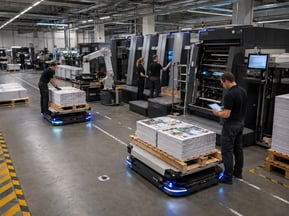 impact on how you run your print shop. Most printers are familiar with the benefits of automation and software systems that make their operations more efficient. AI promises to increase automation even further and amplify those benefits.
Let’s have a look at how AI might impact a print business.
Before we get to the actual printing operations, it’s worth considering large language model (LLM) types of AI that can help sales, communications, and marketing functions. These platforms, such as Gemini, ChatGPT, Meta AI, or Claude, can cut down the time to produce, improve, summarize, and analyze. They can review emails, contracts, proposals, research queries, and other forms of communication.
The more you use the platforms, the better they understand your preferences and style, and the better they get.
For the shop floor, AI-powered algorithms will assess jobs in real time, analyze and enhance images and text for best print quality, adjust color balance, sharpen details, produce accurate font rendering, check for optimal press set up, and select output devices. AI-driven devices may eventually learn client preferences and optimize settings to meet expected performance.
AI will engage in predictive maintenance, continuously monitoring devices for best performance parameters and alerting technicians to potential issues. By analyzing data from sensors and usage patterns, these systems can identify potential issues before they escalate.
As the adoption of smart factory models of production grows, AI will integrate devices into IoT networks so they can communicate with each other on the production floor. For example, presses may communicate with robots that move supplies as needed or move finished sheets to the bindery.
AI printing systems can optimize how printing operations use ink, paper, and energy, and they can recommend eco-friendly practices and waste reduction approaches.
Instant price estimates, even for complex print jobs, may take minutes instead of days or hours. Customers could even generate their own quotes online since AI can analyze historical job data, cost trends, and other pricing variables. AI-powered estimating systems can detect errors, flag pricing inconsistencies, miscalculations, or material mismatches.
Challenges
AI can lead to a brave, efficient, and more cost-effective new world. But it won’t just happen without some serious considerations or tricky management issues.
Like most automation systems, AI integration requires you to invest time and resources, including hardware, software, and enhanced staff training and education. Systems can be complex to operate and may require specific expertise and troubleshooting abilities. Despite its promise, AI is still technology, and we all know that in the real world, technology doesn’t always work totally as advertised.
AI relies heavily on data to function effectively. If it’s given poor data, it will deliver disappointing results, undermining its potential benefits. You must pay attention to how your printing operation can enhance its data collection. Hand in hand with good data is its protection to minimize cybersecurity threats. The need becomes greater as printers handle increasing amounts of customer data.
And yes, most AI systems integrate seamlessly with existing workflows and equipment from multiple suppliers. But as most printers know, this integration is not always easy to achieve or takes more time than estimated.
Preparing
AI can do a lot, no question. The uncertainty for any printer is, what do you need for your shop? Do you need to reduce manual interventions, get a better handle on onboarding clients or estimating, get rid of bottlenecks, or improve the shipping department?
As always, figure out what your problems are, research the solutions, and devise a plan for implementing them, including how you will measure success. Start small, get comfortable, but get going because AI is here to stay.