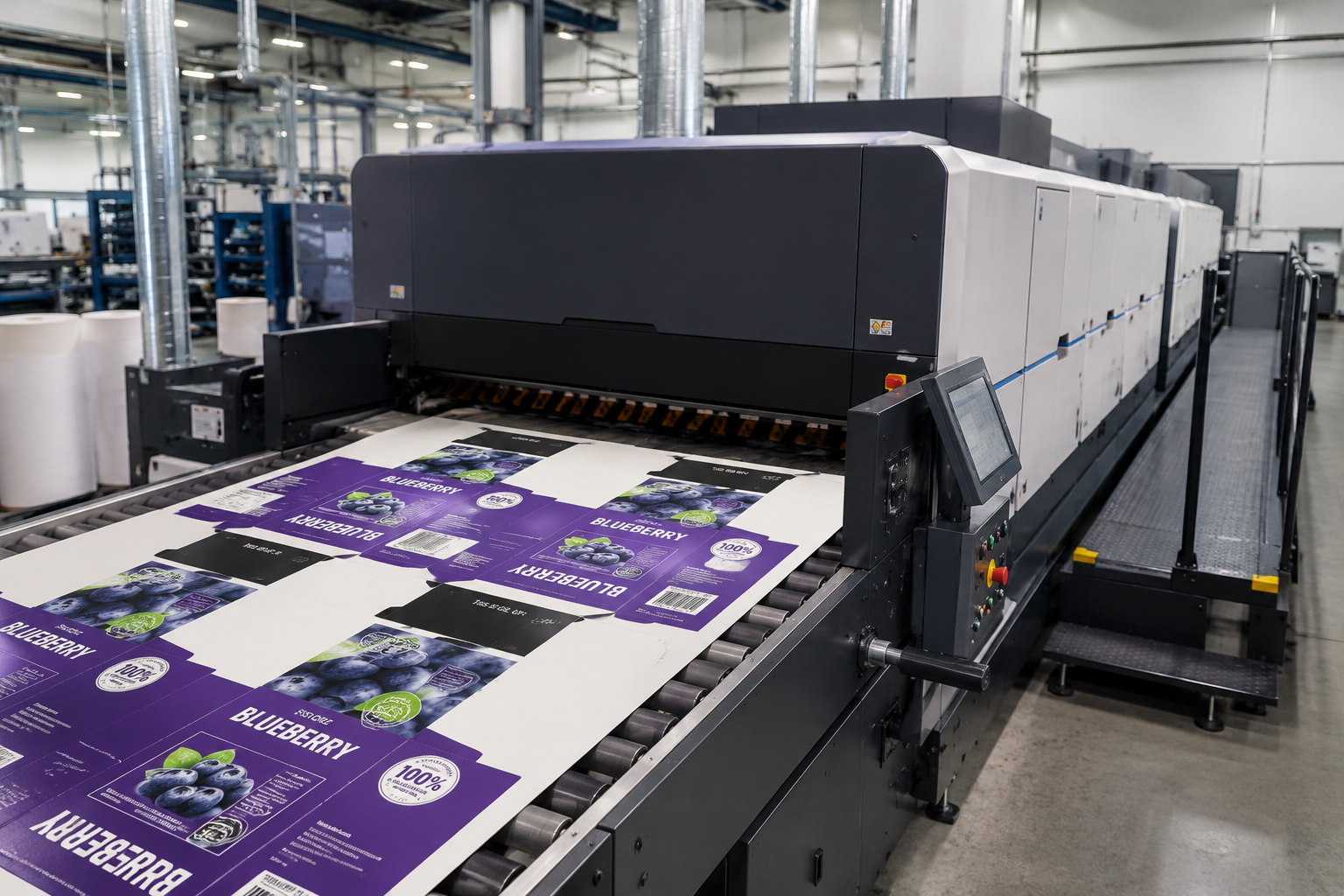
Inkjet technology appeared over 20 years ago. It’s come a long way from those early offerings, and it’s grown from a niche product to a mainstream one, capable of just about any type of printing.
Whatever statistics or researchers we follow, the trend is clear: inkjet continues to grab market share from traditional printing technologies. Some estimates suggest that by 2028, just two years from now, inkjet devices will print a quarter of all document pages. To quantify further: the global inkjet market is experiencing robust growth across both graphic/packaging and industrial sectors. Output is projected to reach $134.6 billion and $42.7 billion, respectively, by 2031, according to research firm Smithers. Graphics andpackaging will produce a 5.9% CAGR; industrial and functional printing will generate a 7.9% CAGR.
Meanwhile, most projections show traditional printing in retreat.
Read More
Topics:
inkjet technology,
news,
packaging growth,
print diversification,
luxury print,
inkjet printing,
substrate diversity,
personalizaiton
How Digital Is Changing Print Business Models
Digital printing has been a mainstay of the industry for over two decades, slowly gathering steam and taking market share from more entrenched offset technologies.
Figures released by international research firm Smithers show that digital printing will be worth $230.5 billion in 2032, a leap from $136.7 billion today. It will account for almost a quarter of all print business, with inkjet set to dominate the market. So despite its current prevalence, digital still has a lot of potential in it.
Read More
Topics:
digital transformation,
news,
inkjet,
digital printing,
print business model,
offset printing,
short runs,
equipment upgrades,
click-based payment,
on-demand printing
We’ve all seen the stats that e-commerce is leaping. Many of us buy toothbrushes online these days! And why not? It’s quick, we don’t have to drive to a store, and we can do it anytime.
While that’s undeniably true of consumer purchases, is it also the case for business buying? That’s the question for any printer considering developing an e-commerce site. Broadly speaking, e-commerce may not be a fit for all markets. But when you consider that most print buyers today have been raised on digital interactions, it’s safe to say printers will benefit from some form of online functionality with a B2B portal.
A B2B portal is a secure, self-service online platform where clients can manage their transactions with you. A well-constructed e-commerce site will accommodate several clients with individual secure logins. Each customer portal will reflect the particulars of that client—products, substrates used, design templates, pricing, order tracking, delivery timelines, purchase history, inventory levels, and so on. Estimates, order intake, proofing, and shipping information will be common functions. Other functions include protocols for user permissions, ensuring only authorized users can access the portal.
Read More
Topics:
print buyers,
news,
automated proofing,
E-commerce,
b2b portal,
order tracking,
customer portal,
online functionality,
digital transactions,
online platform,
self-service
Is your printing equipment actually making you money, or just consuming paper, ink, and floor space? Print buyers in 2026 expect short runs, quick turnarounds, and pricing that holds up when they compare quotes online. If your operation can’t hit those expectations, the work may land with the shop down the road that has already modernized.
A simple equipment audit shows you where the money goes and what you get back. Instead of guessing, you can see which equipment still pulls its weight and which ones quietly drain cash every month.
Read More
Topics:
news,
make ready,
print workflow automation,
total cost of ownership,
printing waste,
oprerator skills gap,
predictive maintenance,
print equipment audit,
downtime costs,
changeovers,
paper spoilage,
aging equipment,
end-of-life risk
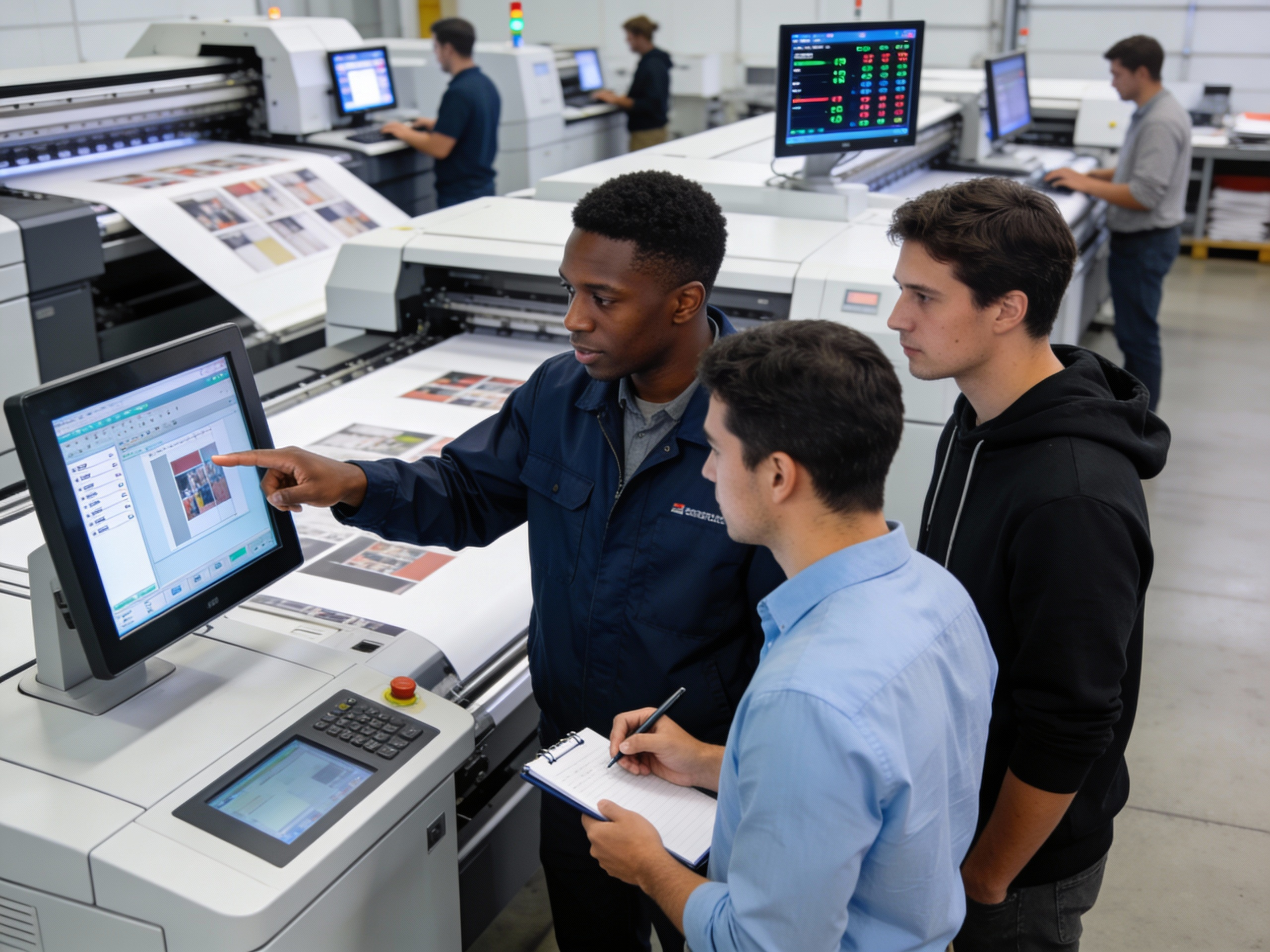
Most print professionals agree that automation is essential to improve workflows in their facilities. But it’s not all about AI, sophisticated software, and robotics. We must also consider the people who work in the printing industry. How must they adapt, and who will help them learn the new skills they will need to thrive in a modern print operation?
The printing business is no longer just about running presses. Modern print businesses must be data‑driven, automated, color‑critical manufacturing operations. As an owner, executive, or manager of a print facility, you’ll need staffing plans to address the people side of the business.
Read More
Topics:
MIS,,
Automation,,
news,
print industry,
color management,
staff training,
digital skills,
data technicians,
omnichannel integration,
workflow improvement,
recruiting talent
Brand management isn’t at the top of the to-do list at many print services companies. There are so many other things demanding attention that working on the brand doesn’t seem important. Printing companies often relegate branding to the “when we have time” category of business tasks, which might be a mistake.
It’s possible to run a successful business supported by referrals and repeat business without spending much time on creating and nurturing your brand, but future growth may depend on it. A strong brand establishes a professional image and helps shape the perception customers and prospects have about a printing company.
Read More
Topics:
marketing,
news,
visual elements,
brand management,
brand identity,
print service business,
differentiation,
professionalism,
branding strategy,
customer perception
The path to profitability in printing lies in optimizing efficiencies. It’s almost impossible to achieve reasonable profit levels when waste is too high, costs aren’t under control, and equipment isn’t functioning properly.
Print optimization is all about improving processes to make them efficient, cost-effective, and highly productive. It starts with assessing existing operations to identify whether changes need to be made to equipment, software, administrative functions, or other areas. Perform the assessment before preparing a plan that focuses on hardware and software upgrades, and regular upkeep. The benefits include cost savings, more profitability, and greater competitiveness.
Read More
Topics:
news,
production automation,
staff training,
print shop productivity,
print optimization,
print shop efficiency,
printing software,
equipment maintenance,
reducing print waste,
print production management
Print company customer expectations now revolve around speed, convenience, personalization, and reliability. Print quality and excellent customer service are still important, of course, but these elements no longer offer the competitive advantages they once did. The changing market demands compel printers to evaluate their traditional workflows and seek opportunities to upgrade technology that enables more automation and digital integration.
The Customer Experience
Online portals, automated quoting, web-to-print ordering, and digital proofing reduce friction throughout the buying process. If your operation has yet to implement solutions like these, now is the time to consider your options. Automation investments you make today will simultaneously improve the customer experience, lower your labor costs, and reduce your dependence on seasoned employees (who may be approaching retirement age).
Read More
Topics:
news,
workflow efficiency,
printing automation,
ai,
modernization,
predictive analysis,
printing industry,
customer expectations,
business continuity
The worlds of print and digital marketing and communications continue to be more integrated and complementary. Today, no communications manager or marketer would focus on one platform
without integrating its execution with others. It’s simply how consumers absorb information today.
Designing for print and digital platforms can be quite different. They feature various substrates, resolutions, file formats, and production processes; yet the trend is to make projects work seamlessly despite the differences.
Read More
Topics:
news,
user experience,
interactive design,
responsive experiences,
audience engagement,
print and digital integration,
adaptive content,
immersive experiences